

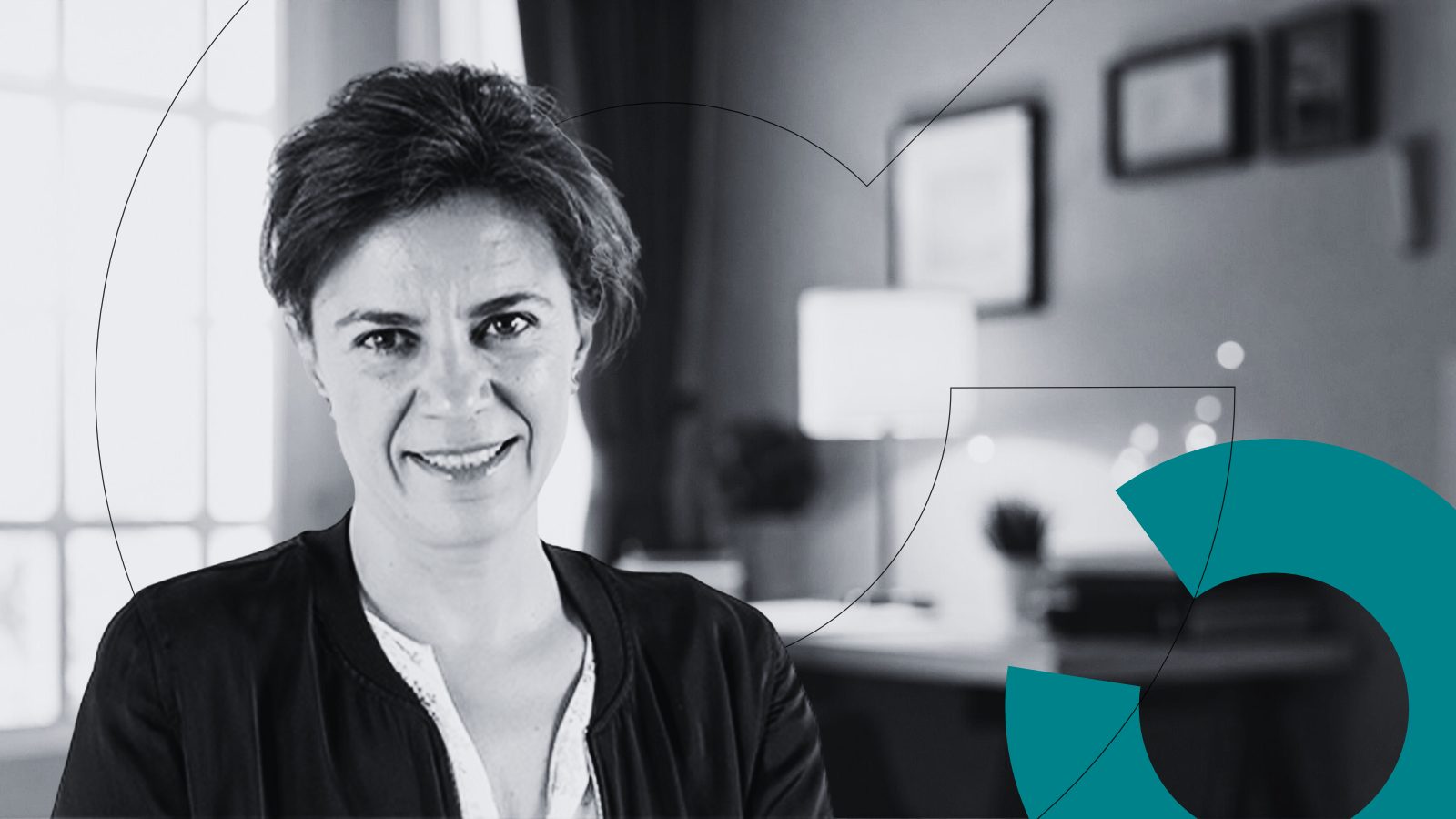
Isabel Cid-Harguindey, who has just received the Master Certified Coach (MCC) by ICF, is an Executive Coach by the European School of Coaching, where she also leads educational innovation projects in adult learning. With an extensive experience accompanying professionals and organisations in change processes, she integrates coaching, experiential learning and agile approaches to design more human, effective and sustainable development environments.
1. Congratulations, Isabel!!! How do you feel now, what does it mean to you to be a CQI?
Thank you! Obtaining this accreditation has meant for me the recognition of a long journey that began many years ago, when I found myself “by chance” in the exciting world of coaching. It has been a path full of dedication, perseverance and a lot of learning.
2. What would you highlight about the path to becoming a CQI?
I would stress that, along the way, doubts and obstacles inevitably arise and that in the face of them it is always possible to continue believing, persevering and trusting in our ability to move towards our goals and purposes. When we look at our journey with a broader view, we discover that from the most difficult moments an inner strength emerges that perhaps we were unaware of.
3. What has been the most difficult thing in your coaching career? The most beautiful, the best?
The most beautiful thing, without a doubt, is the relationship and the bond that is generated with the coachees. To be able to witness in each session the capacity we have to learn, grow, go beyond and transform ourselves is a privilege.
I don't know if I would talk about «difficult», but I would talk about the place where I most connect with my own vulnerability: to resonate emotionally with the person when emotions emerge that are not always pleasant, that have a deep meaning even if sometimes it is difficult to go through them and that come to show us something important. Accompanying experiences of dissatisfaction, anger, fear, pain or sadness is part of what is most human in coaching and, despite its difficulty, it is also profoundly beautiful.
4. What have you learned in this process? What do you know now, as a CQI, that you didn't know before?
This process has reinforced my conviction that it makes great sense to be part of a community that reviews professional standards and reflects on the ethics of coaching. This shared vision helps to ensure that professional practice is underpinned by sound ethical principles and competencies. and offers us a framework from which to review our performance. Stopping to reflect and review allows us to identify where we can continue to grow.
5. What does the CQI enable you to do?
Firstly, it allows me to celebrate a recognition that brings me joy and satisfaction, a stop along the way to honour what I have experienced. Secondly, it invites me to continue on this path with greater clarity, responsibility and depth.
6. What is the purpose of coaching today?
To reconnect with our capacity to keep learning. To review our inner perspectives, become more aware of our emotions, thoughts and habits, and develop a growth mindset. Also to identify our needs and illusions and to let go of what no longer serves us along the way.
7. What would you like your legacy as a coach to be?
I would like to inspire, both in the classroom and in individual sessions, to look at ourselves with more empathy and to see ourselves bigger than we think we are today. To cultivate an inner dialogue that generates wellbeing, to better understand why we act the way we do and to honour our history in order to let go and transform ourselves into what is meaningful to us.
I wish to do my bit in the form of humanity, confidence and joy; that people see themselves as more capable of moving towards what makes sense to them.
ISABEL, IN THE PODCAST, EVERYTHING HAPPENS IN CONVERSATION.