

Natalia Nenadovit | EEC Alumni Protagonist of the Month | May 2026
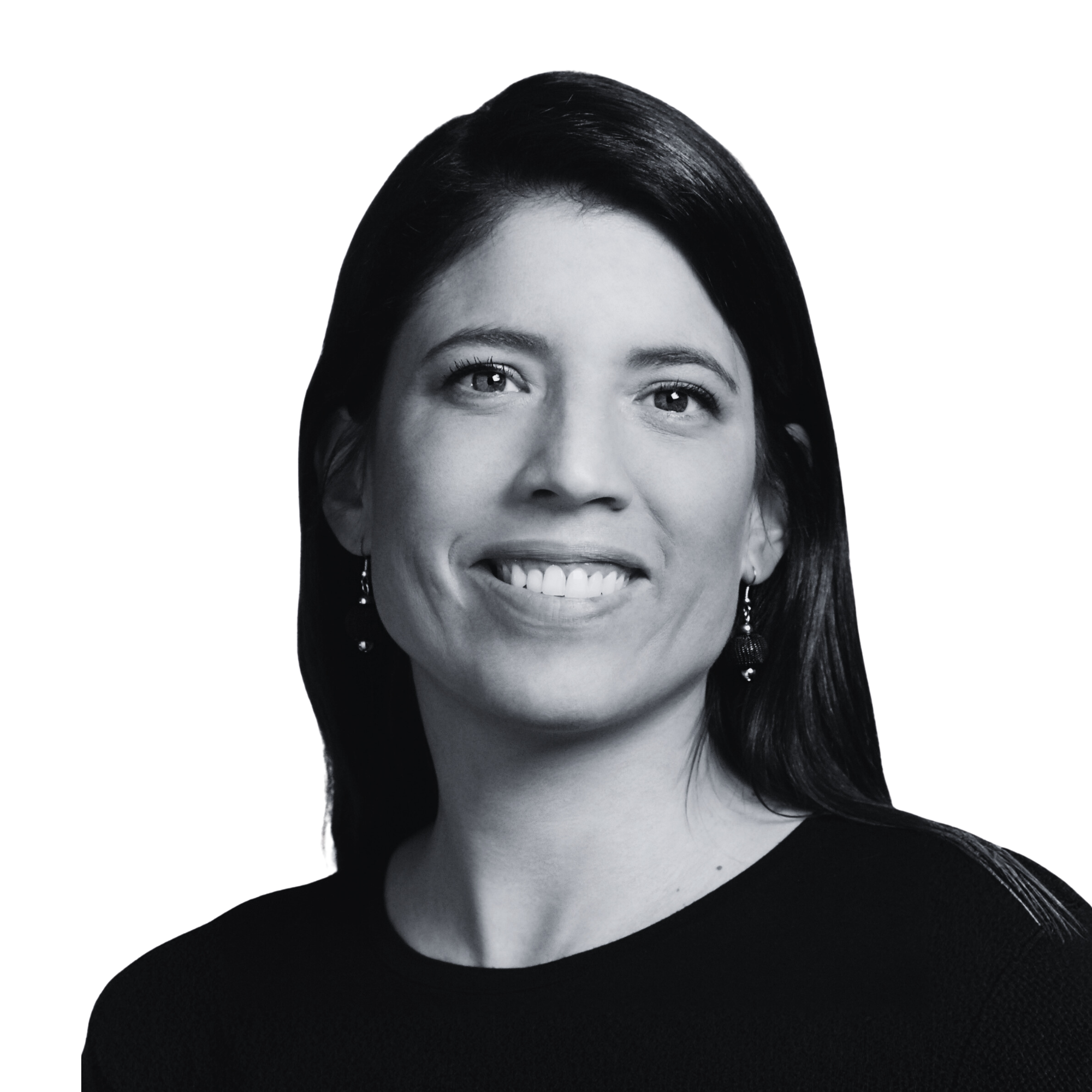
«I learned that profound change does not happen by imposition or excessive effort.»
How would you briefly describe yourself?
If I had to summarise, I'd say I'm a woman who inhabits leadership with humanity and coaching with depth. I move naturally between global strategy and intimate conversation, and I enjoy both because, at their core, they touch the same question: how does a person transform, and what impact does that transformation have on everything they build?
I believe my work – in all its forms – is about creating spaces where people can encounter themselves in a way that is honest, clear, and expansive. And I remain convinced that few things generate as much impact as a conversation in which someone feels truly seen, heard, and supported to look a little further.
How did you come to coaching in general and to EEC in particular?
I came to coaching through experience, long before I considered formal training. I started in group coaching and meditation settings which allowed me to discover something that resonated deeply with me: the transformative power of a conversation shared from a place of presence.
Over time, that interest became a more deliberate pursuit, and I began to train in mindfulness. Each step deepened an intuition: that accompanying human processes was something natural for me, almost inevitable.
In parallel, my professional life moved on global stages, leading multicultural teams and supporting individuals making decisions that impact thousands. For almost a decade now, I've been working with entrepreneurs and CEOs worldwide, and in those conversations, I began to see what isn't visible from the outside: the emotional toll of leadership, the unspoken loneliness, and the tension between ambition and well-being.
Then something impossible to ignore appeared: the certainty that supporting leaders required training commensurate with their complexity.
And then I found the European School of Coaching. From the very first session, I felt I was in the presence of something qualitatively different. At EEC, I found a profound method, solid ethics, mature pedagogy, and exquisite humanity.
Today I can say that coaching first arrived as an intuition, then as a search, and finally as a calling that I fully embraced. And the EEC was the place where that calling found form, foundation, and future.
What is your passion?
My passion is to accompany people through processes of discovery, clarity, and expansion. I am moved by that moment when someone sees something they couldn't see before, when a conversation opens up a new horizon, or a well-posed question illuminates a part of their identity that was waiting to be recognised.
I am passionate about leadership, but not its technical dimension: my passion lies in leadership experienced through consciousness, responsibility, and depth. I am interested in what goes on inside those who steer organisations, decisions and futures, and I am inspired to accompany them in the search for a freer, more authentic, and more aligned way of leading.
There is something that runs through everything I do: the enjoyment of the journey, both mine and that of those I accompany. I am passionate about creating spaces where growth stops being experienced as a demand and starts being experienced as an opening. Where there are discoveries, but also relief. Where there is transformation, but also celebration.
How do you charge your batteries? What gives you energy?
I need spaces where I can slow down, take a deep breath and listen to myself again. I'm energised by silence, reading, walking, calmly drinking mate and those moments when I can observe life without rushing. Being with my family energises me, as does connecting with myself: training presence, returning to my breath, getting back on track.
Being in conversation with others. When a session becomes a space of clarity, when someone discovers something important, when a question opens up a new possibility, I feel a very particular vitality.
Accompanying human processes energises me, it doesn't exhaust me. It reminds me why I do what I do and returns me to my purpose. And, above all, the good shared path recharges my batteries. I feel that energy multiplies when the other person also starts to enjoy their process.
In essence, I recharge my batteries when I can be present, connected, and in alignment with myself, and when I share meaningful moments with the people I love most and with whom I work.
What drains your energy and how do you manage it?
Dynamics where there's no presence drain my energy: constant rushing, empty conversations, disconnection, and environments where no one truly listens. I also find a lack of clarity, emotional noise, and moments where the external pace accelerates more than my internal world can sustain to be draining.
How do I manage it? By returning to myself. Centring myself. I seek out spaces of silence, reduce noise, prioritise, rest, and take deep breaths. I also talk to trusted people who help me to see clearly. Over the years, I've learned something essential: energy isn't protected by isolating yourself, but by choosing where to direct your attention and from what place you connect. I look after myself so that I can look after others. I get organised so that I can support them.
What news would you like to hear?
I would like to hear more people – in organisations and in life – allowing themselves to lead from consciousness, from presence, and from humanity. That they start to make decisions not just from logic and efficiency, but also from connection with what truly matters.
That leaders dare to look within themselves and find a freer, kinder way of living and working in that process. I would also like to hear that personal development stops being a marginal or “individual” matter and becomes a natural part of the culture in companies, schools, and communities. That well-being, reflection, and deep learning become pillars, not accessories.
And on a more intimate level, I'd like to hear stories of transformation: someone regaining hope, finding clarity, daring to make a change, feeling good about themselves again. I'd like to hear about people allowing themselves to enjoy their journey, even amidst challenges. Ultimately, I'd like to hear good news about the expansion of human consciousness, because every time a person transforms, their entire environment changes with them.
Complete the sentence: Through coaching I learned...
…to broaden my capacity for observation, to listen from a place that enables possibilities I didn't see before, and to trust in the transformative power of a genuine conversation.
I learned that profound change doesn't happen through imposition or excessive effort, but when a person feels seen, supported, and free to explore who they can become. And I also learned that when I transform, the way I support others transforms too.
Which coaching distinction do you prefer? Why and for what purpose?
I'll stick with the observer's distinction. Because it transforms the way we understand reality and, above all, the way we understand ourselves.
The observer reminds us that we don't see the world “as it is,” but as we are, as we have learned to look, as we have been shaped by our history, our beliefs, and our internal conversations. And that, when we change the way we observe, our possibilities, our actions, and our available futures change.
It is a distinction that gives us back freedom. It allows us to move from reacting to choosing, from repeating to creating, from functioning on autopilot to acting with consciousness. It invites us to recognise that we are not a fixed outcome, but a living process capable of expanding, refining and transforming.
I'll stick with this distinction, as it has the most impact on my personal and professional life. It allows me to help leaders see what they weren't seeing, to open paths where they only saw limits, and to discover broader versions of themselves.
And also because it reminds me, every day, that I myself am in permanent expansion. That my way of observing conditions the quality of my presence and, therefore, the quality of the support I offer.
What impact has what you have learned in coaching had on your personal and professional life?
Coaching had a profound and transversal impact on my life. It transformed the way I listen, relate to myself, and lead.
He taught me to pause, to observe with more awareness, to ask myself from what place I am acting and what possibilities I open —or close— with each observer I inhabit.
Personally, it allowed me to live with more coherence and serenity. I learned to read my emotions more clearly, to put language where there was previously noise, to distinguish my internal narratives, and to choose with greater freedom how I want to be in the world. It helped me inhabit my own life with more presence and depth, and to enjoy not only the results, but also the journey.
Professionally, the impact was even more visible. I work daily with entrepreneurs and CEOs from all over the world, and coaching radically expanded my way of supporting them.
It gave me a distinct quality of presence, finer listening skills, and the ability to sustain complex conversations without dominating or directing. It allowed me to see what lies behind strategic decisions: identity, fears, longings, and invisible tensions.
Today I can accompany leaders in their most delicate processes with a more human understanding and a broader perspective. Coaching has not only enriched my professional practice: it has elevated my way of exercising leadership, building community, and creating spaces where others can think better, feel better, and lead better.
In essence, coaching transformed how I approach life and work. It taught me to offer support from a more conscious, lighter, and truer place. And it allowed me to fully integrate who I am with what I do, which I consider one of the greatest gifts of this journey.
How and with whom do you currently apply coaching?
Coaching had a profound and far-reaching impact on my life. It transformed how I listen, how I relate to myself, and how I lead. It taught me to pause, to observe more consciously, and to ask myself from what place I am acting and what possibilities I open—or close—with each perspective I inhabit.
Personally, it has allowed me to live with greater coherence and serenity. I've learned to read my emotions more clearly, to put words to what was once just noise, and to choose more freely how I want to be in the world.
Professionally, the impact was even more visible. Coaching radically expanded my way of supporting entrepreneurs and CEOs, with a different quality of presence, finer listening, and a greater capacity to sustain complex conversations without intruding or directing. It allowed me to see what lies behind strategic decisions: identity, fears, desires, and invisible tensions.
Coaching transformed my way of being in life and at work. It taught me to support others from a more conscious, lighter, and more authentic place.
What would you say to someone considering training in coaching?
I would tell them that training in coaching is one of the most transformative decisions a person can make. It's not a course, it's not a set of tools: it's a path that changes the way you observe, listen, relate, and lead. It's a journey towards a more conscious and freer version of oneself.
I would also tell you that choosing a school is key. I searched extensively before finding a place where depth, ethics, and humanity were truly integrated.
Arriving at the European School of Coaching marked a before and after: I found serious, demanding, mature, and profoundly respectful training of the human process. A school that does not simplify complexity, that cares for the profession, and that honours the transformation of people.
Having completed my Certification cycle, I decided to continue my training at the EEC —and I know I will continue—. Because I found a committed community, a solid method, and a space where my vocation can continue to grow with rigor and authenticity.
The EEC offers a language, structure and quality of accompanying that, in my experience, are hard to find elsewhere. And, above all, I would tell you that if you feel a calling – even a small one – listen to it. Because coaching doesn't just teach you how to accompany: it transforms you first, and from that place it changes the way you accompany, lead and live.
What has been your greatest achievement?
My greatest achievement has been finding my calling, not as an alternative path or a transition, but as a natural and profoundly coherent evolution of my professional journey.
For years I worked in global environments, supporting entrepreneurs and CEOs, facilitating strategic conversations, nurturing communities, and leading high-impact initiatives.
Without me realising, that whole journey already contained the seeds of something deeper. Coaching didn't arrive to replace anything, but rather to give language, structure and depth to a way of accompanying that had always been present in my leadership style. It was an internal revelation: understanding that my sensitivity for listening, connecting, supporting and facilitating clarity was part of a calling that had been gestating for a long time.
My greatest achievement is having recognised that calling and having integrated it in an organic way – not parallel, not alternative – within my professional identity.
Today, coaching enhances my role, expands it, and makes me more aware. It allows me to support leaders from a more human, more present, and more aligned place with the complexity of the challenges they face.
Finding my calling was a process of listening and maturing, and the greatest achievement is having been able to unite all that I am: my global journey, my work at YPO, and my deep desire to support human processes. Nothing is replaced; everything is integrated.
What has been your biggest challenge?
My biggest challenge has been learning to sustain external complexity without losing my own centre.
I work in global environments where conversations, decisions, and paces are often intense and multidimensional. For years, the challenge was finding a balance between the demands of the role, responsibility towards others, and my own internal well-being.
The real challenge was understanding that clarity is not born from control, but from presence; that accompanying leaders in their processes — often immersed in major transitions — demands that I myself can inhabit my emotions, recognise my limits and look after the quality of my own energy.
It wasn't a challenge of overload, but of growth. Learning to listen to myself, to put words to what I needed, to order my internal priorities and to lead from a more conscious and sustainable place.
That process allowed me to expand my capacity to support and cultivate a much more serene and aligned way of being in the world. Today, I look back at that challenge as one of the most valuable stages of my life. It gave me depth, it gave me tools, and it gave me a more authentic presence. And, above all, it taught me something fundamental: that in order to be able to support others, I first have to support myself well.
What mistake have you learned the most from?
The mistake I learned the most from is linked to a quality that has always been very present in me: curiosity.
Throughout my life, that curiosity opened doors for me, connected me with fascinating people, and propelled me to explore very diverse paths.
But, over time, I also discovered its “B-side”: when it unfolds without focus, it can lead me to bite off too much and lose depth in subjects that deserve more attention.
During certain times I confused “everything that interests me” with “everything I must maintain,” and that lack of distinction led me to scatter energy in multiple directions. I learned that curiosity is a wonderful force when accompanied by intention, rhythm, and boundaries.
That not everything that sparks interest deserves commitment, and that depth—the kind that truly transforms—requires sustained presence. That lesson was crucial. It taught me to choose better, to order my internal priorities, to take care of my energy, and to value quality over quantity.
Today I am still deeply curious, but from a more conscious place and aligned with what I truly want to build. It was a valuable mistake, because it helped me grow as a leader, as a professional and as a person. It gave me focus, clarity and a more serene way of being in the world.
Complete the sentence: I would like to...
...to continue growing in alignment with who I am, to surround myself with people who inspire me, and to create spaces where learning and enjoyment are a natural part of the journey.
I would like my development – and that of those around me – to continue advancing with clarity, authenticity, and joy, the kind that appears when everyone is connecting with their own purpose.
Complete the sentence: I never thought that...
…I would discover a calling so aligned with my way of being, capable of integrating all my professional journey and, at the same time, opening up such a significant inner path for me.
I never thought that such a conversation-focused practice could transform me so profoundly, nor that accompanying others would also help me find parts of myself I didn't know were waiting to emerge.
What is success for you?
Success, for me, is living in coherence. Being able to make decisions aligned with who I am, with what I value, and with how I want to relate to the world. I don't measure it by external results, but by the quality of my presence: by how I listen, how I choose, how I support, and how I navigate each stage of my life.
Success is when my professional life and my personal life feel integrated; when ambition and well-being can coexist; when what I do makes sense and who I am finds space to be expressed.
It's also a success to see others advance. To accompany someone at a key moment in their life, to witness a profound discovery, or to see someone regain clarity and purpose. That has a value that transcends any visible achievement. In summary, success for me is not a destination, but a way of living: with awareness, with honesty, and with the inner feeling of being where I want to be.
Is there anything else you would like to add?
I would only add that I deeply value conversations that allow us to see ourselves more honestly and live more clearly. I believe in the power of connections that enable growth, in spaces where we can think better and feel better, and in the transformative strength of walking together.
I feel grateful to have found a path where my professional experience, my calling, and my way of being in the world integrate so naturally. And to be part of a community that honours depth, presence, and human development with seriousness and respect.
I also really enjoy meeting people and hearing stories. If you've come this far and something I've shared resonates with you, I'd be delighted to have a chat. Good conversations always open up possibilities, and we never know what can come out of an authentic conversation.
For me, coaching is just that: a space where consciousness expands, where life is put in order, and where each person can reconnect with their own light. Accompanying those processes is, without a doubt, one of the greatest privileges of my life.
What are you reading? What book is on your bedside table?
What are you reading? What book is on your bedside table?
I am reading The Coach's Brain Meets AI: How to Transform Coaching with Neuroscience and Artificial Intelligence, by Sahar Andrade.
I chose it because the combination of neuroscience and new technologies applied to coaching caught my attention, as did the possibility of exploring how these fields can broaden our perspective on change processes.
I'm still in the early chapters, but I'm already finding the invitation to think about coaching from a more integrated perspective interesting: understanding how the brain works in learning situations, and at the same time, exploring what role artificial intelligence can play as a complement – not a substitute – for human experience. It's a read that sparks questions, opens up possibilities, and fuels my curiosity about how our practice will continue to evolve in the coming years.
Which coaching or development book would you recommend?
Which coaching or development book would you recommend?
No doubt about it, Coaches' training manual, by Silvia Guarnieri and Ruth Gavilan Hernández. It's a book I consider essential for anyone who wants to understand coaching from a serious, ethical, and profound perspective.
It is not a light or quick read; it is a work that invites you to think, to practice, and to look at the profession with the responsibility it deserves. I value it because it offers clear distinctions, solid frameworks, and a way of approaching conversation that aligns deeply with ontological practice and with how I understand accompaniment.
It is a book that does not simplify human complexity, but rather honours it. For me, it is a read as necessary as it is transformative for anyone who is training or wishes to elevate the quality of their practice.
What is your song of the moment?
My song of the moment is I Am Light, by India Arie. I like it for the freshness and calm it transmits, for the clarity of its message, and because it invites us to inhabit a more serene and authentic inner space. It's a song that accompanies me in moments of reflection and reminds me of the importance of returning to centre.
Other Testimonials

«Listening fills your soul and every silence is not emptiness; it is an opportunity.»
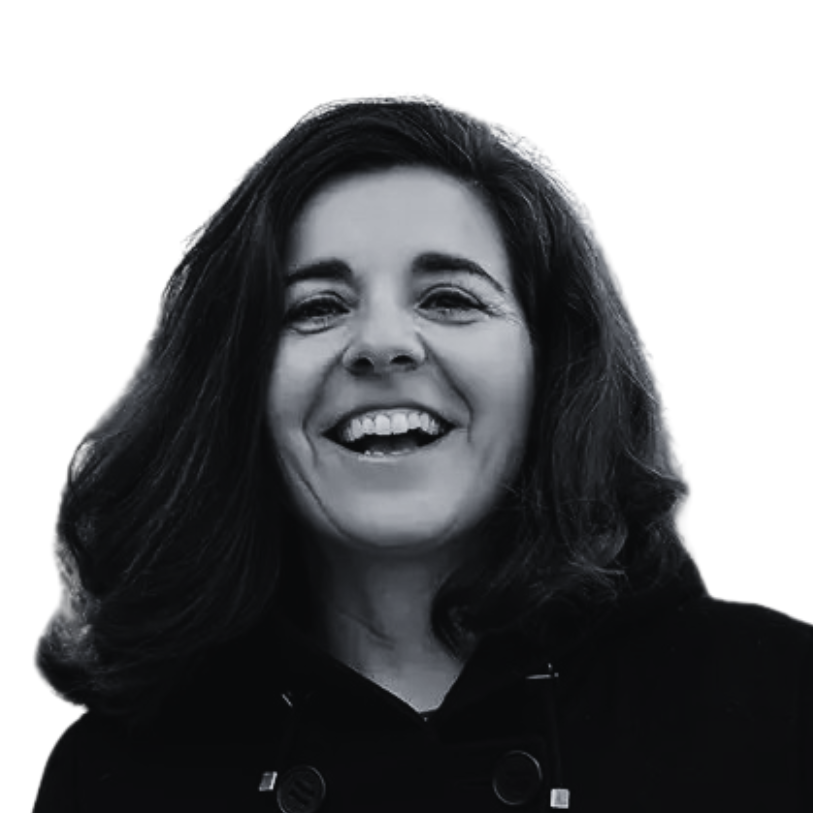
«I stopped disregarding myself, no longer listening to myself and thinking that others were going to save me»
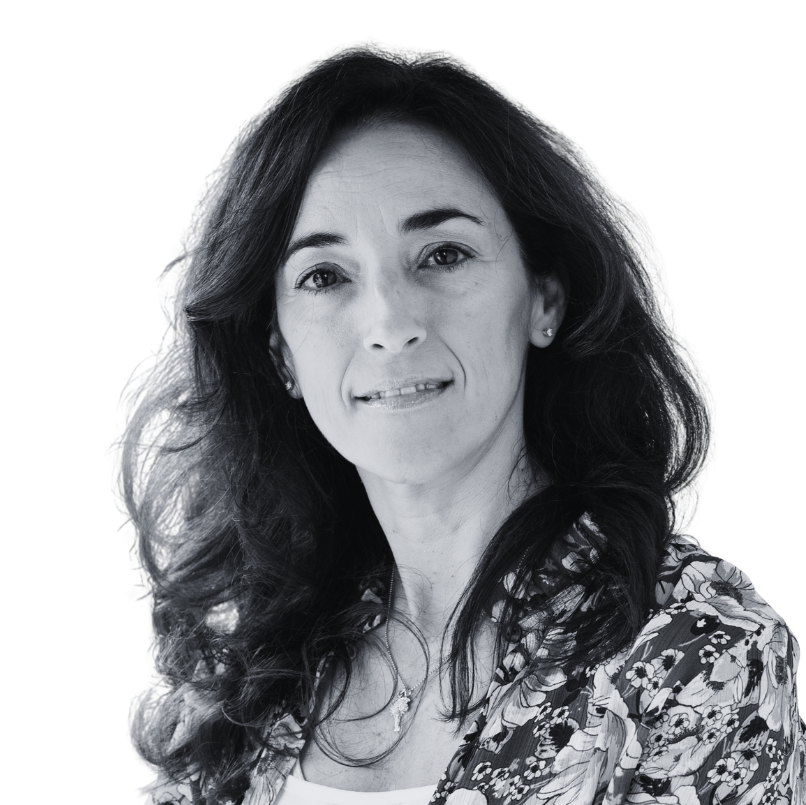
«My self-worth does not depend on constant achievement or the opinion of others»