

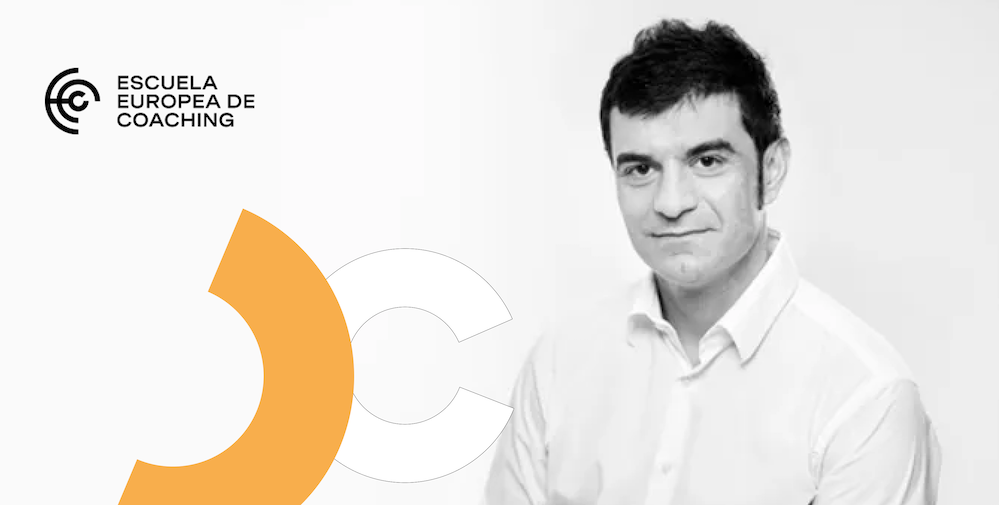
This week, the International Coach Federation (ICF) awarded Patxi Rocha, an experienced coach from the European School of Coaching, the distinction of Master Certified Coach (MCC). This is an achievement that highlights his extensive career, which includes over 2,500 hours of coaching and demonstrates his commitment to quality and depth in coaching practice.
Patxi Rocha joins an elite group, becoming the sixth coach within the European School of Coaching in Spain, and one of the eight worldwide at EEC, to be accredited as MCC.
This remarkable achievement not only reflects your exceptional dedication and skill in the field of coaching, but also highlights the EEC's commitment to excellence and the professional development of its coaches, promoting standards of quality and ethics in coaching practice at a global level.
How are you feeling today? What does being an MCC mean to you?
It implies satisfaction and gratitude. Gratitude because It is solely thanks to my clients and the companies I've had the good fortune to support over these years that I've been able to achieve this MCC accreditation. The client teaches you everything about yourself. It is the logical consequence of a path, I would say a stop along the way, because the worst evil of a coach is complacency.
I would say it's like in the world of sport, when a team or an athlete wins a competition, but the most important thing is that the next day you have to go training to be the most finely tuned resource for your clients.
What would you highlight about the path to becoming an MCC?
I would highlight the commitment involved in establishing common quality standards for this profession. I believe it's everyone's job, especially considering those who, under the label of coaches, do more harm than good, in having quality criteria and an ethical code that helps to keep unqualified individuals and malpractice out of this field.
What has been the most difficult thing in your career as a coach? The most beautiful, the best?
More than difficult, I would talk about the discipline of maintaining the serene tension necessary to be helpful or a catalyst for my clients, but I wouldn't talk about difficulty. The most beautiful thing, the best thing, is to be a resource to help teams and individuals become more efficient or happier through your intervention.
That almost immediate reporting of these experiences is the most rewarding, knowing – because they express it to you – that your support has helped to foster vital or organisational changes.
What do you know now as MCC that you didn't know before? What does the MCC allow you to do?
I would say that the MCC certification process allows us to banish bad habits or autopilot modes that we all develop as coaches. To present yourself for MCC certification obliges you to place the client at the centre of the process, to leave your ego behind, to be curious and irreproachable in your treatment of information.
Without forgetting that coaching is action, and that the success of coaching surely has to do with it being reflection for action, being an MCC is like updating your operating system to the latest version, not resting on your laurels, and being committed to continuously examining your praxis as a coach.
What coaching for today?
I would say that the perception of our psychological care and emotional wellbeing has changed. We already had this preventive idea about physical health developed: we have an annual medical check-up, we go to the ophthalmologist, the gynaecologist, the dentist preventively, before we are sick. We eat healthily, we exercise.
Nowadays, we are also incorporating this concern for our emotional and psychological well-being, because we understand that acquiring emotional habits and relational skills can allow us to work in organisations in a healthier way and to be happier in our personal lives.
And coaching, with its focus and methodology, fits perfectly with this concern because it gives the client the full spotlight so that they can reflect, look at themselves, change their perspective on their reality, and most importantly, take action in a much more effective way.
What would you like to leave as a legacy?
The word legacy sounds a bit transcendent to me... The feedback or reports we receive from clients and teams on how our intervention or guidance has helped them align values and desires with their actions is more than sufficient.. It's powerful to meet with a client years later who tells you that the work you did together has helped them to be happier, to change, to improve.