
- Your name: Àngels García.
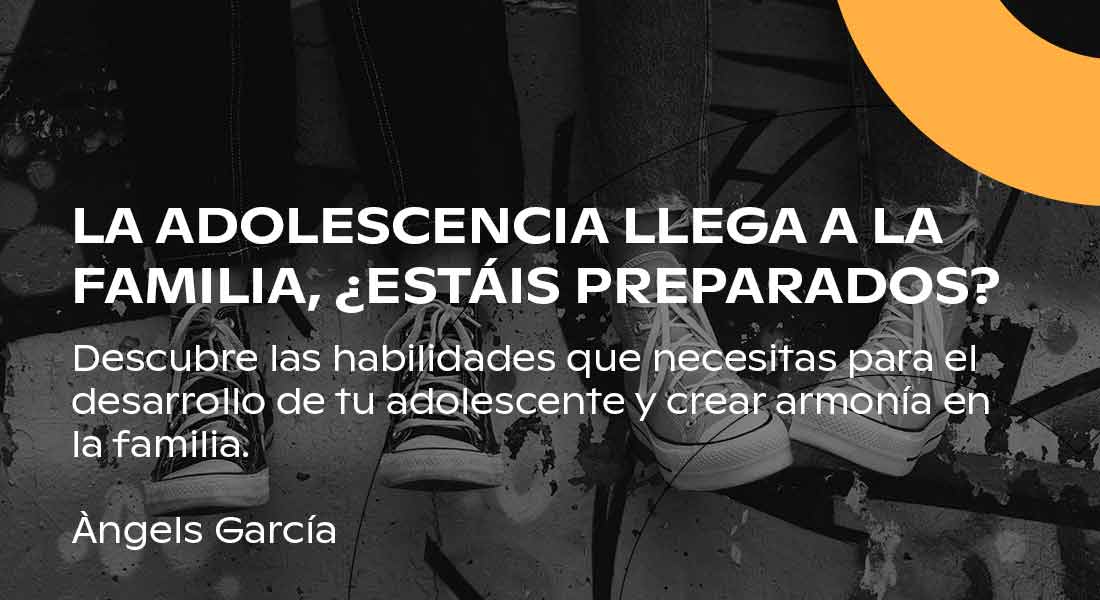
- Title of the book: "Adolescence comes to the family, are you ready?
- Date of publication: 1 June 2022.
Àngels García answers a questionnaire about her book, La Adolescencia llega a la familia ¿estáis preparados?
Could you summarise your book in one sentence?
Adolescence is the most important stage of life in the construction of the adult person.
How did the idea for this book come about and what motivated you to write it?
It was a suggestion from people around me and families who came to the talks I gave in high schools. When we were confined I had the time to explore and focus on the creative process of the book. I was fortunate to have a lot of support from people who had been through coaching processes with me and who gave me feedback before publishing the book.
To whom, how and when do you recommend reading it?
I recommend reading my book mainly to mothers and fathers of children from the age of 10. But it is never too late, this book is helping families with teenagers up to the age of 24.
The aim of my book is to raise awareness that adolescence is a difficult stage for the adolescent and for the family. Behavioural changes in adolescence, rebelliousness, impulsivity, intensity of emotions, etc., are due to the important changes that occur in the brain. From this awareness, adolescents have nothing against the family; it is not a personal issue, it is a brain issue.
With a new outlook, mothers and fathers can be the best life coaches for their adolescents. With empathy, listening, presence and a lot of patience, adolescence is an opportunity to accompany our children in their personal development towards the independent and autonomous adult who will create his or her own future.
What tools from the book can be used in a coaching process?
In the book you can find most of the tools that are used in a coaching process, as it is based on the learnings from my coaching sessions with families and adolescents. I highlight the systemic family approach, LISTENING as the basis for creating a trusting relationship, the management of emotions and distinctions.
At what point in the learning process as coaches might it be advisable to read it?
I recommend reading it to those who are taking the Specialisation in Families and Adolescence, because in order to accompany the family system and make intervention possible, it is essential to know what adolescence is and the biological and socio-cultural aspects that influence adolescents.