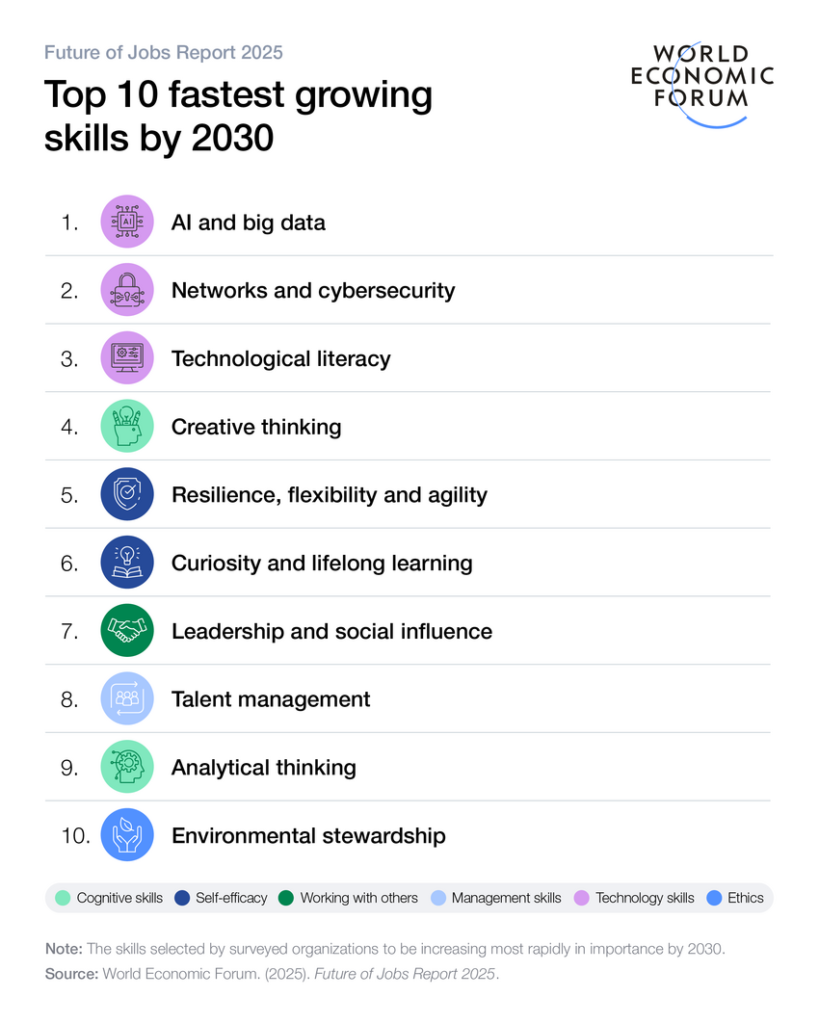


The World Economic Forum's Future of Jobs Report 2025 include among the ten fastest-growing skills creative thinking, resilience, flexibility and agility, curiosity and lifelong learning, leadership and social influence, talent management and analytical thinking. The other three skills are those related to AI and big data,and knowledge of networking and cybersecurity, and technology.
The interesting reading is precisely there: Technology does not displace the need for human capabilities; it changes the context in which we need to use them.
The issue is not choosing between technology and people
It is possible that one of the false dichotomies in the debate on the future of work is thinking that we will have to choose between developing technological skills or developing the so-called soft skills.
However, we will need both. Making good use of the possibilities that come from technology also requires the use of critical thinking, judgement, creativity and the ability to ask good questions.
And, above all, Work remains a deeply relational activity. We continue to make decisions with other people, leading teams, managing difficult conversations, supporting change processes, giving and receiving feedback, negotiating priorities and building trust.
In fact, itself The World Economic Forum points out in this Future of Jobs report that, in addition to technological skills, resilience, flexibility, agility, leadership and social influence maintain a central role, whilst empathy and active listening appear among the main capabilities considered relevant for organisations.
Developing skills also involves developing awareness
Here a less visible issue appears when we talk about and and aire crucial: Not all capabilities are developed by accumulating information.
Knowing that we need to be more flexibility does not necessarily mean we know how to respond with flexibility in a situation of uncertainty. Knowing the characteristics of good leadership also does not guarantee that we know how to exercise it when pressure, conflict or resistance arise.
Between the “I know I should do it” and “I am able to do it another way” There is a learning process. And that process requires practice, reflection and, in many cases, guidance.
One of the reasons why coaching has been carving out its own space in leadership and professional development processes is that Coaching does not focus solely on transmitting answers, but on encouraging reflection processes that allow individuals to observe their own patterns, broaden perspectives and generate new ways of acting.
Applied organisational psychology has also studied the use of coaching and other interventions to support the development of leaders and professionals, and to improve both their performance and well-being in the workplace.
What does it mean, then, to be prepared for 2030?
Perhaps it is not about trying to anticipate exactly what work will be like in four years' time. It may be more about developing the ability to continue learning when the context changes.
- Learning to work with AI. And to learn to think critically about what it offers us.
- Develop new technological skills. And strengthen our capacity to relate, lead and collaborate.
- Being more efficient. Keeping in mind what kind of conversations, decisions and relationships we want to build.
Because if one thing seems clear in the forecasts for 2030, it is that adaptability will be a competency in its own right. The World Economic Forum estimates that around 39% of current skills could be transformed or become obsolete between 2025 and 2030, and that 59 out of every 100 workers will need further training to adapt to changes in the labour market.
Therefore, preparing for the future should not be understood solely as learning new tools. It also implies get to know each other better, review how we think and act, expand our capacity for learning and develop the way we support other people.
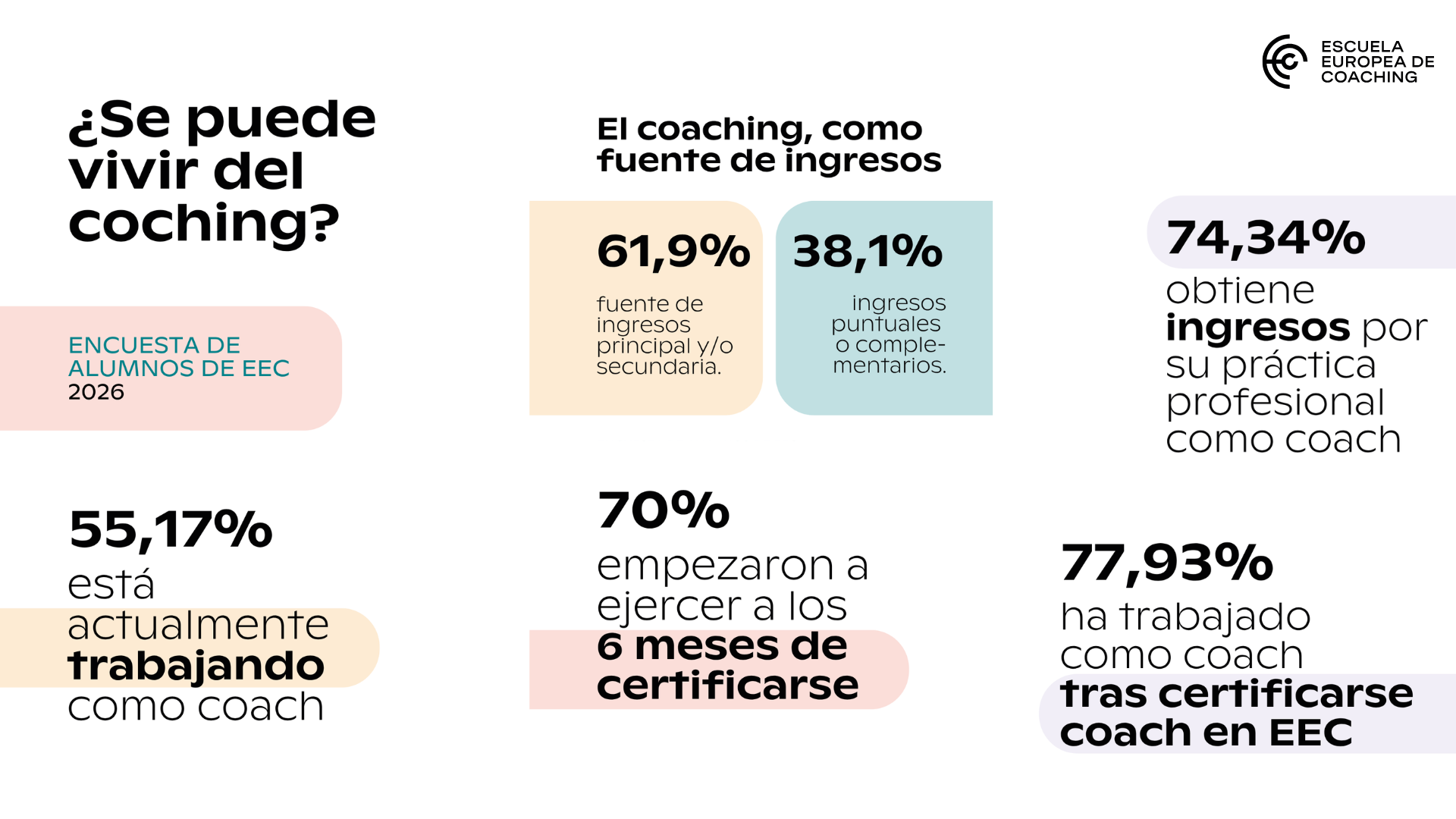
Technology will continue to advance. The coaching which trains all these skills and consciousness is already here.